Use-case map
For peelers and graters, I start with the job, not the finish. A hand peeler answers fast prep for potatoes, carrots, apples, and citrus; a handheld grater handles zest, cheese, garlic, and finer prep; a box-style grater gives you more surface options; a rotary grater shifts effort away from the wrist and toward the tool itself.
In a comfortable everyday kitchen, the right pick usually comes down to where it will live and how often it comes out. If it needs to sit in a shallow drawer, hang on a hook, or stay within reach near prep space, that storage decision matters as much as the cutting surface.
Decision factors
Footprint and clearance come first. Some peelers and graters are easy to tuck away, while others need more drawer depth, more hand room, or more counter space during use. I would also check the cleanup path: tools with more crevices, extra parts, or containers usually ask for more washing time.
Task fit is the other big divider. If you mostly want zest or a quick dusting of cheese, a slim handheld tool may be enough. If you need multiple cuts from one tool, a combination grater can reduce clutter. If grip comfort or hand strain matters more, a rotary design or a longer handheld body can change the experience.
Construction details also hint at upkeep, grip feel, and how visually heavy a tool may seem on the counter or in a drawer. Stainless steel is common here, but the broader build still affects how stable, sharp, and easy to rinse the tool feels in daily use. Price spread matters too: spending more usually buys a more specialized shape or a cleaner handling setup, not necessarily a better fit for every kitchen.
Best for each situation
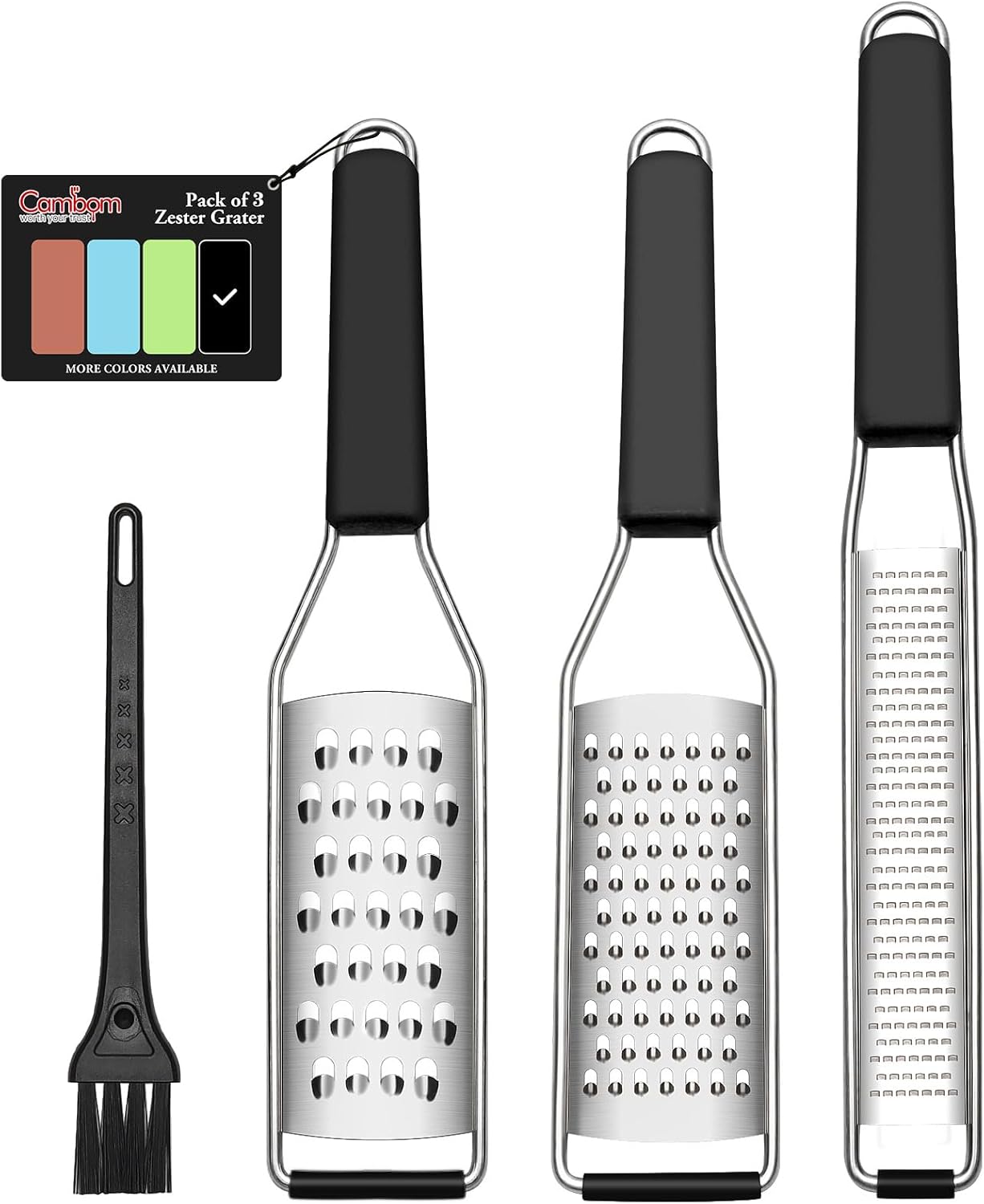
Best for storage support: the Cambom Lemon Zester Grater Three-piece Suit is the clearest fit when you want a small, multi-piece set that stays organized. The protective shells and extra tool variety make it the most storage-minded choice in this group, especially if you want separate tools for different prep jobs without filling a drawer with loose metal pieces.
Best for cleanup and maintenance: the Deiss PRO Lemon Zester & Heavy Duty Cheese Grater & Vegetable Grater stands out when a single handheld grater needs to be easy to rinse and put away. Its long, slim shape keeps the footprint simple, and it suits readers who care more about straightforward washing than about extra attachments or a larger prep station.
Best for small-space use: the Zulay Kitchen Rotary Cheese Grater 5 Blade Cheese Shredder makes the most sense when you want to reduce direct contact with the blade and keep the active grating motion more contained. It asks for more storage commitment than a simple handheld tool, but it can be the better match when wrist comfort and controlled prep matter more than a minimal footprint.
Best for compact all-in-one prep: the Box Grater with Container is the more structured option if you want a container-style setup with multiple grating surfaces in one place. It fits readers who prefer one larger tool over several small ones, especially when catching grated food as you work matters more than keeping the drawer contents tiny.
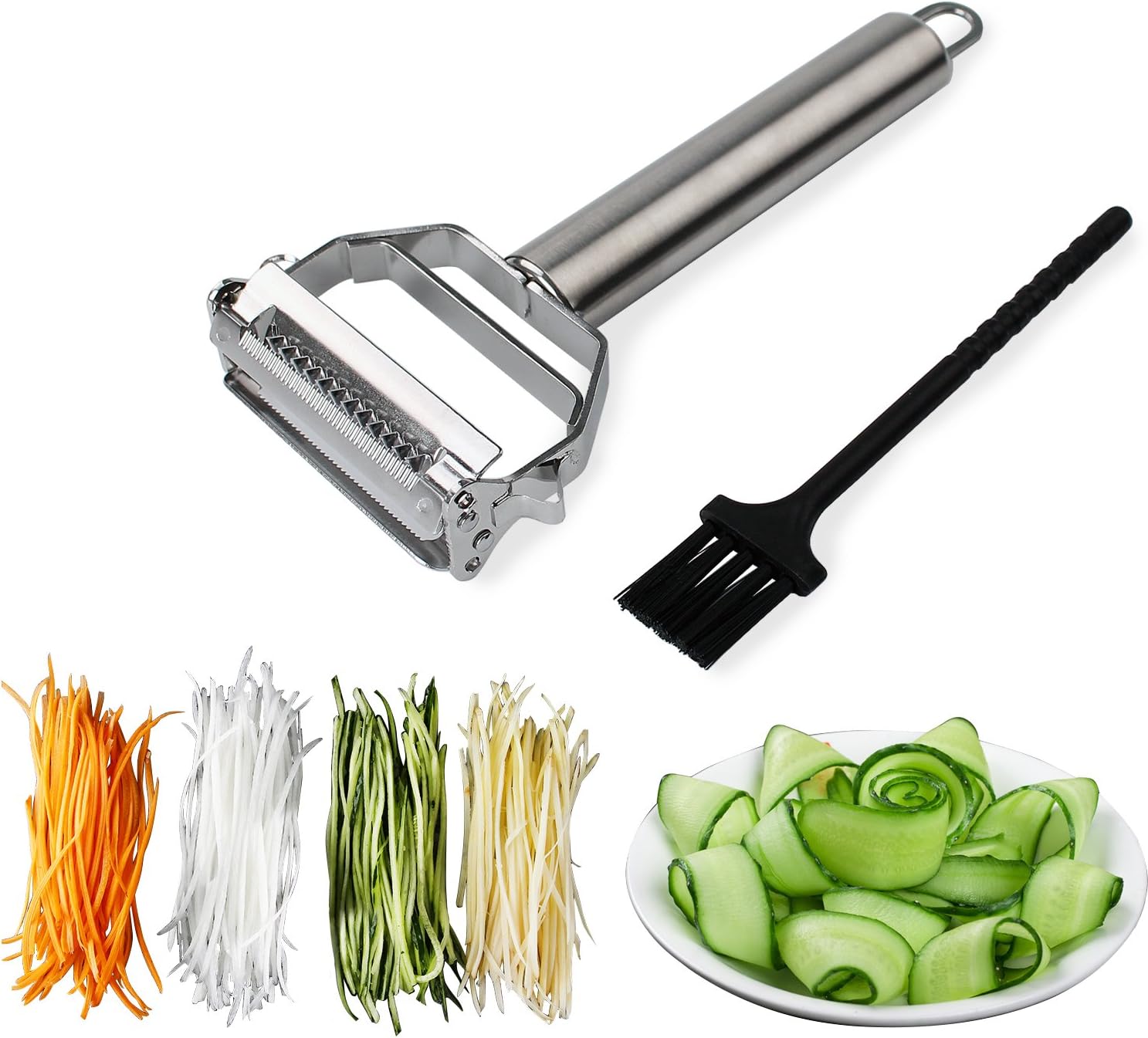
Best for fruit and vegetable peeling plus julienne work: the SUNKUKA Potato Apple Vegetable Peeler Julienne Peeler for Kitchen is the most focused choice when peeling is the main job and julienne is the bonus. It is the best match for cooks who want one compact handheld tool for produce prep rather than a larger grating system.
Tradeoffs
The main tradeoff across this category is specialization versus flexibility. A single-purpose peeler is simple to store and quick to grab, but it will not replace a grater. A multi-surface grater or combination set covers more jobs, but it adds cleaning points and more shape to manage in a drawer.
The second tradeoff is comfort versus compactness. Rotary styles and larger box-style tools can feel easier during longer prep sessions, but they also ask for more space. Slim handheld tools are easier to store, yet they may demand more hand effort or more passes when you are preparing larger amounts.
When price rises, I expect more of the difference to show up in handling, design complexity, and convenience features than in a dramatic change in the basic task. Spend more when the tool will be used often enough that grip comfort, cleanup, or multi-function setup actually matters. Save money when your main need is occasional peeling or zesting and you do not need a more elaborate format.
Quick answer
For peelers and graters, start with the prep task, then compare blade format, washing effort, storage footprint, and how exposed the cutting surface feels during use. This guide is for readers who are choosing peelers and graters that fit the prep task, cleanup routine, and available drawer or counter space. Cambom Three-Piece Grater Set is the first pick to compare for a drawer that needs one slim tool for zesting, fine grating, and coarser prep without adding a bulky box grater. Its current price signal is Under $25. Its review context is 4.7 rating from 3,345+ reviews.
How to choose between these picks
Start by matching the peelers and graters to the prep routine and tradeoff that matters most:
- footprint and clearance.
- task fit.
- room fit.
- maintenance.
- visible tradeoffs.
- material and construction signals.
- price spread.
- Daily usefulness.
Measure/check before buying
- Separate peelers and graters by prep job first: peeling, zesting, shredding, slicing, or catching grated food.
- Check drawer length, handle height, counter space, and whether the tool needs a dry suction surface.
- Look at blade exposure, grip control, and whether extra parts create more washing after prep.
- Choose between one slim handheld tool and a larger multi-surface setup before comparing prices.
- Recheck the current peeler or grater price before relying on it as the value pick.
- Use the product photos for blade layout and handle shape, then confirm the listed size or fit details.
- Treat ratings as context after the option already matches the prep job and storage space.
Common cautions
- Check blade access, handle control, and cleanup points before assuming the sharpest-looking tool is the easiest to live with.
- Measure the exact drawer, counter, or cabinet spot before choosing peelers and graters.
- Match peelers and graters to the prep job before relying on the main product photo.
- Call out the biggest peeler or grater drawback before treating an option as the front-runner.
- The tool may solve a different prep job than the one the buyer actually has.
- Cleaning, reach, or adjustment can matter more than the first product photo.
- Listed size details may miss the handle clearance, blade guard, or storage space the tool needs.
FAQ
What matters most when choosing peelers/graters?
Start with the job, then check footprint, cleanup effort, and the one tradeoff you will notice most in daily use. A tool that fits the task but not the storage space usually becomes annoying fast.
What should I check before buying peelers/graters?
Measure the placement area, think about how often you will wash it, and match the format to the task. A slim handheld tool, a multi-surface grater, and a rotary design each solve a different problem.
Related guides
- Small Kitchen Storage - Connects this peelers/graters decision to the broader small kitchen storage hub.
- Kitchen tools - Compare adjacent prep, serving, storage, and appliance choices for everyday cooking.
- Best Cutting Boards for Prep Space, Cleanup, and Counter Storage - Related internal guide.
- How to Choose Coffee and Tea That Actually Fit | Coffee and Tea for Small Spaces: Fit Details to Check - Related internal guide.